
Monday of the Seventeenth Week in Ordinary Time, July 27, 2026
The Mustard Seed and the Spoiled Loincloth: The Challenge of Faithful Growth
Jer 13:1-11, Deut 32, Mt 13:31-35
My dear Sisters and Brothers in Christ,
On this Memorial of Saint Martha, the sister of Mary and Lazarus, the Church presents us with a striking contrast: the prophet Jeremiah’s warning of a people who have clung to their own pride, and the Lord’s promise of a Kingdom that grows from the smallest beginnings. Martha, who welcomed Jesus into her home and served Him with active faith, stands as a model of the hospitality and service that the Kingdom demands.
The prophet Jeremiah performs a symbolic act. The Lord tells him to buy a linen loincloth and wear it. Then he is told to bury it in a crevice of the rocks near the Euphrates. After many days, he digs it up, and it is “spoiled, good for nothing.” The loincloth represents the people of Israel, who were meant to cling closely to the Lord, “like a loincloth clings to a man’s waist.” But they have turned away, pursued other gods, and become “good for nothing.” They have rejected the intimate relationship God offered them, and their pride has corrupted them.
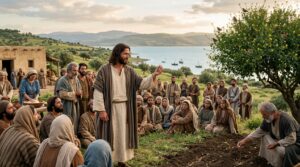
In the Gospel, Jesus tells two parables of growth. The mustard seed, the smallest of seeds, grows into a large shrub where birds can nest. The leaven, hidden in three measures of flour, leavens the whole batch. The Kingdom of God begins in obscurity, in humility, in hiddenness. But it grows into something that shelters and nourishes all. The hidden leaven works silently, transforming from within.
The connection between Jeremiah and the Gospel is the tension between human pride and divine grace. Jeremiah warns that Israel’s pride has made them spoiled and useless. They have forgotten their intimate calling. But Jesus proclaims that the Kingdom grows from the smallest, most humble beginnings—a mustard seed, a pinch of leaven. The Kingdom does not rely on human pride or power; it is the work of God, hidden and silent, but ultimately all-encompassing.
Pope Francis has said, “The Kingdom of God is like a seed that grows quietly. It does not make noise, but it transforms everything.” Saint John Paul II, in his encyclical Redemptoris Missio, wrote, “The Church is the seed of the Kingdom, the beginning of the Kingdom on earth.” And Saint Augustine, reflecting on the leaven, said, “The Lord hides His leaven in the world, and it works until the whole is leavened.”
What does this mean for us? We are called to cling to the Lord like a loincloth clings to a man’s waist—intimately, faithfully, totally. But we can become spoiled by pride, by the pursuit of other gods, by the illusion that we can stand on our own. The Gospel calls us to humility: to recognize that the Kingdom does not depend on our power, but on the hidden, silent work of God. We are the mustard seed, called to grow despite our smallness. We are the leaven, called to transform the world through humble service, not through domination.
Saint Martha shows us this humility in action. She served Jesus with active faith, welcoming Him into her home. Her service was not a display of pride, but a generous response to His presence. She is the leaven in her household, the mustard seed in her community.
This week, let us examine our hearts. Where have we become “spoiled” by pride? Where have we forgotten our intimate calling? Let us ask the Lord to plant the seed of His Kingdom in our hearts. Let us allow His leaven to work secretly, transforming us from within. And like Martha, let us welcome Jesus into our homes and serve Him with joyful faith. For the Kingdom is near, and it grows from the smallest acts of love. Amen.
May God bless you all!
If this homily inspired you, please
📱 Follow us on TikTok: @mmrvals
📺 Subscribe on YouTube: Myanmar RVA Language Services – YouTube
🙏 Prayer Request: Drop a comment below if you’d like us to pray for you or someone you love. We’ll remember you in our prayers!