Saturday of the Seventeenth Week in Ordinary Time, August 1, 2026
The Truth That Frees: Standing for Justice in a Hostile World
Jer 26:11-16.24, Psalm: 68, Mt 14:1-12
Memorial of Saint Alphonsus Liguori, Bishop and Doctor of the Church
My dear Sisters and Brothers in Christ,
On this Memorial of Saint Alphonsus Liguori, a Doctor of the Church and founder of the Redemptorists, the Word of God presents us with a stark and urgent choice: to speak the truth, even when it costs us everything, or to remain silent and let the world fall into darkness. Jeremiah stands before the princes and the people, refusing to recant his prophecy, even under threat of death. John the Baptist confronts Herod’s adultery and loses his head. Both are witnesses to the truth. Both pay the price.
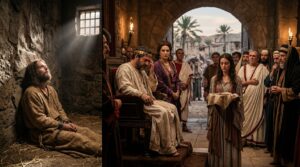
In the Book of Jeremiah, the prophet is on trial for his life. The priests and prophets have accused him of speaking against the Temple and the city. Jeremiah does not shrink back. He declares, “It is the Lord who sent me to prophesy all that you have heard. Now, therefore, reform your ways and your deeds, and listen to the voice of the Lord.” His defense is not his own eloquence; it is his obedience to God. The princes and the people hear him, and they declare, “This man does not deserve death; it is in the name of the Lord, our God, that he has spoken to us.” The truth, even when unpopular, has the power to convict and to save.
In the Gospel, Herod hears about Jesus and is filled with fear and guilt. He thinks John the Baptist has been raised from the dead. Matthew recounts the brutal story of John’s death. John had spoken the truth to Herod about his unlawful marriage. For this, he was imprisoned and eventually beheaded. Herod, a man of power, is shown to be weak—swayed by his oath, his guests, and the dancing of a girl. He executes John, not because he wants to, but because he is trapped by his own pride.
Saint Alphonsus Liguori, the founder of the Redemptorists, lived in a time of great moral confusion and spiritual laxity. He was a brilliant moral theologian, but his teaching was always rooted in the mercy of God. He understood that the truth must be spoken with love, but it must be spoken. He founded a religious order dedicated to preaching the Gospel to the poor and those most in need of conversion. He was a witness to the truth, even when it required sacrifice.
Pope Benedict XVI, reflecting on the witness of John the Baptist, said, “He did not seek his own glory; he sought only the truth. He was the voice crying in the wilderness, and he paid for his witness with his life.” Pope Francis has said, “The truth is not always comfortable, but it is always liberating.” And Saint Alphonsus himself wrote, “He who speaks the truth in love is never without reward, even if he is persecuted.”
What does this mean for us? We live in a world that often rewards silence and punishes the truth. We are tempted to remain silent about injustice, to compromise our principles, to avoid the hard conversations. But Jeremiah and John the Baptist remind us that truth-telling is a form of love. It is love for God, love for the sinner, and love for the community. We are not called to be prophets in the Temple or to confront kings, but we are called to speak the truth in our families, our workplaces, and our communities.
This week, let us examine our hearts. Where are we silent when we should speak? Where are we compromising the truth for the sake of comfort? Let us ask for the courage of Jeremiah, the boldness of John the Baptist, and the merciful wisdom of Saint Alphonsus. And let us trust that the truth, even when it leads to suffering, is always the path to freedom. Amen.
May God bless you all!
If this homily inspired you, please
📱 Follow us on TikTok: @mmrvals
📺 Subscribe on YouTube: Myanmar RVA Language Services – YouTube
🙏 Prayer Request: Drop a comment below if you’d like us to pray for you or someone you love. We’ll remember you in our prayers!