
Memorial of the Passion of Saint John the Baptist, August 29, 2026
The Cost of Truth and the Dignity of Work: Witnesses of the Word
2Thess 3,6-10.16-18, Psalm: 127, Mk 6:17-29
My dear Sisters and Brothers in Christ,
Today, the Church commemorates the Passion of Saint John the Baptist, the precursor who prepared the way for the Lord and paid for his witness with his life. The Gospel presents the tragic story of a king who allowed pride and a rash oath to lead him to murder an innocent man. Saint Paul, in his letter to the Thessalonians, speaks of the importance of work, of living quietly, and of not being a burden to others.
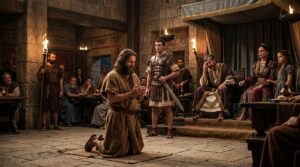
In the Gospel of Mark, we see the brutal execution of John the Baptist. Herod, who had married his brother’s wife, was confronted by John’s prophetic witness. John had declared, “It is not lawful for you to have your brother’s wife.” John spoke the truth, even to a king. He was imprisoned and ultimately beheaded because of a dance and a promise. Herod, a man of power, was swayed by pride and fear. He did not want to kill John, but he was trapped by his own words. John’s witness cost him his life, but it was not in vain. He prepared the way for Christ. He spoke the truth in love. He gave his life for the Kingdom.
In the Second Letter to the Thessalonians, Saint Paul speaks of a different kind of witness: the witness of faithful work. “We were not idle among you, nor did we eat anyone’s food without paying for it. On the contrary, with toil and labor, we worked night and day so as not to burden any of you.” Paul warns against idleness and being a burden. He commands them to “work quietly and to earn their own living.” This is not just a practical instruction; it is a spiritual one. Work is a participation in the creative work of God. It is a way of serving others and building up the community. It is a witness to the dignity of human labor.
The connection between the readings is the cost of witness. John the Baptist witnessed with his life. Paul and the apostles witnessed with their labor. Both are forms of witness. Both require sacrifice. Both are rooted in the truth of the Gospel. John spoke the truth, even when it cost him his freedom. The apostles worked with their hands, even when they could have claimed support. Both understood that witness is not just about words; it is about actions, about integrity, about giving one’s life for the sake of the Gospel.
Pope Benedict XVI, reflecting on John the Baptist, said, “He was the voice crying in the wilderness, but he was more than a voice; he was a man who gave his life for the truth.” Pope Francis has said, “The dignity of work is a fundamental part of the Christian life. Work is not a curse; it is a participation in God’s creation.” And Saint John Chrysostom, reflecting on John’s martyrdom, said, “John did not die for himself; he died for the truth. His blood became the seed of the Church.”
What does this mean for us? We are called to be witnesses—witnesses to the truth, witnesses to the dignity of work, witnesses to the Gospel. We are called to speak the truth, even when it is unpopular. We are called to work faithfully, to contribute to our communities, to live with integrity. We are called to give our lives for the sake of the Kingdom, not by seeking martyrdom, but by living each day with courage and love.
This week, let us examine our hearts. Where are we called to speak the truth? Where are we called to work with integrity? Let us be like John the Baptist—fearless in proclaiming the truth. Let us be like Paul—faithful in our daily labor. And let us trust that our witness, whether in word or deed, will bear fruit for the Kingdom. Amen.
May God bless you all!