When Three Waters Became One: A Living Testament to Faith and Creation
Something sacred hung in the air at St. Columban’s Cathedral that Sunday morning. As the faithful gathered on September 6, 2026, for the World Day of Prayer for the Care of Creation, they carried with them not just their rosaries and prayer books, but something far more elemental—water.
Water from Putao, cradled in the misty mountains of northern Kachin. Water from Tanghpre, where the Mali Hka and N’Mai Hka embrace and birth the great Ayeyarwady. And water from the Ayeyarwady itself, the lifeline that sustains a nation.
Three waters. One people. One Creator.
The Journey of Water, The Journey of Faith
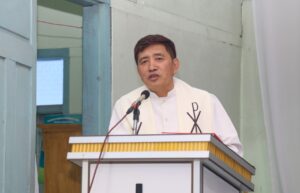
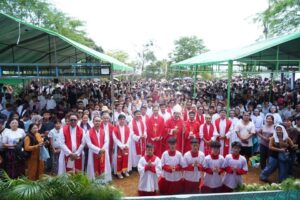
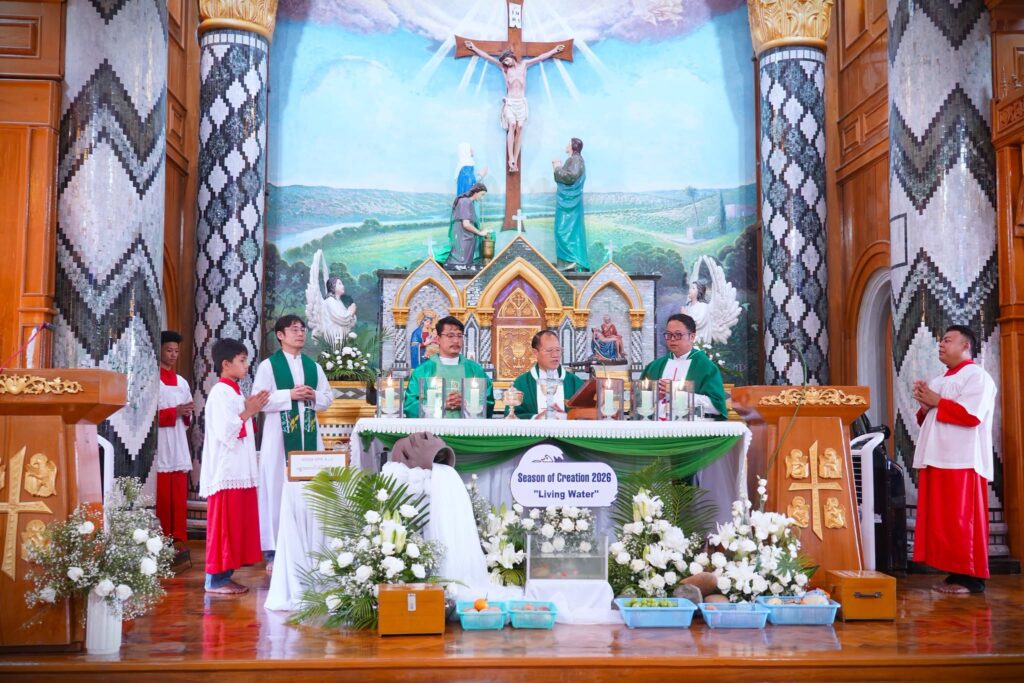
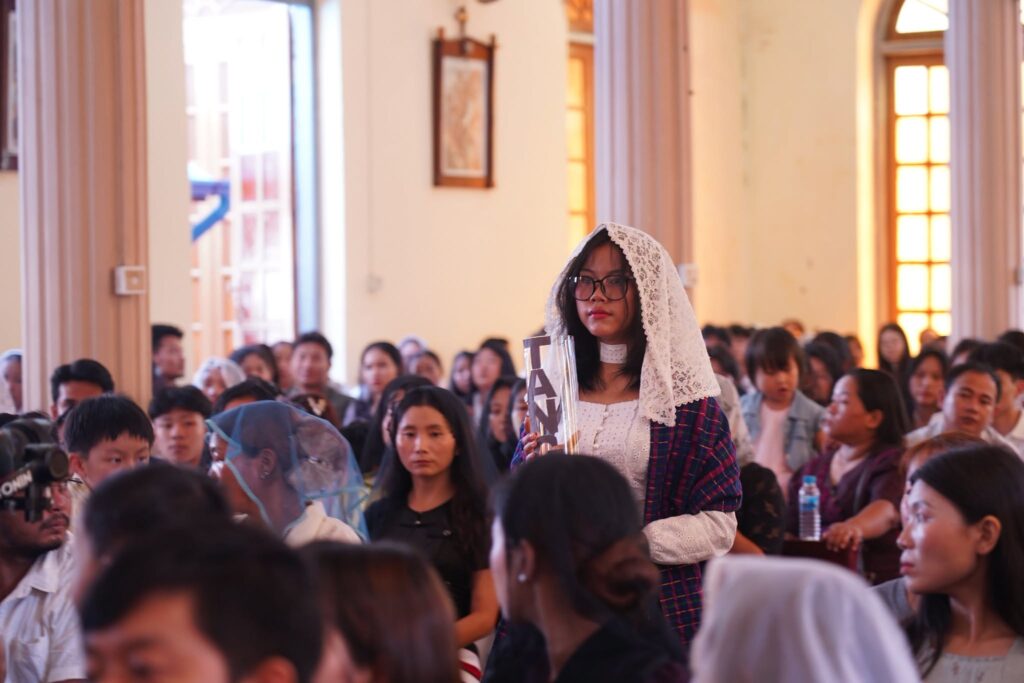
The 10:00 a.m. Mass at St. Columban’s Cathedral was not an ordinary Sunday liturgy. Presided over by Msgr. Peter Hka Awng Tu, with several priests concelebrating, the celebration wove together faith, ecology, and cultural identity into a tapestry of profound beauty.
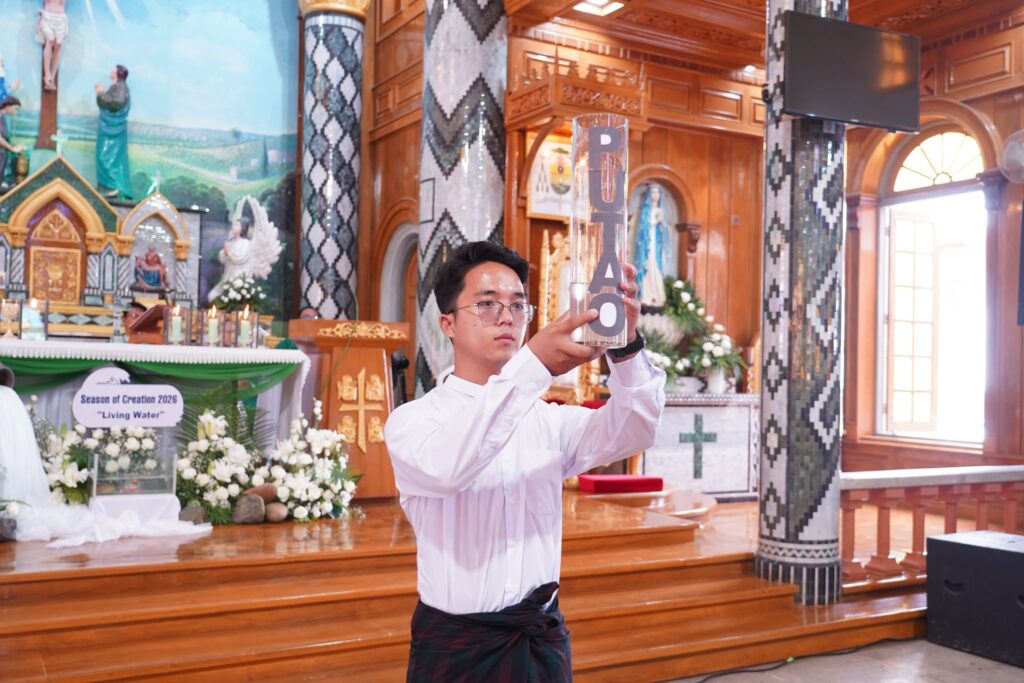
As the young people of the diocese took their place before the congregation, they carried not just words but the very essence of their homeland. The reflection began in Putao—a remote paradise of forests, mountains, and rushing streams that remind us of life’s origins.
“Water flowing from the mountains reminds us of God’s gift of life,” they said, their voices carrying the weight of generations. “It gives life not only to human beings but to all living creatures and to creation itself.”
Their journey continued to Tanghpre, where the Mali Hka and N’Mai Hka rivers meet in a dance of unity. The confluence was presented as a powerful symbol—just as two rivers become one, people of different ethnic and cultural backgrounds are called to live as one human family.
“The Ayeyarwady reminds us to come together,” the young people declared. “Even though we may belong to different ethnic groups, we should live like members of one family and learn to share with one another.”
A River Polluted, A People Called
And then came the Ayeyarwady—Myanmar’s great river, its lifeblood. But the reflection took a sobering turn. The young people spoke not only of the river’s beauty but of its wounds. Pollution. Toxic waste. Dead fish floating on poisoned waters. The relentless destruction of forests, the ravaging of mountains for gold and rare earth minerals.
Msgr. Peter Hka Awng Tu echoed their words in his homily, his voice carrying both sorrow and hope. He spoke of Ezekiel 47:9—”Wherever the water flows, there will be animals and fish”—and the beauty of God’s living water. But he also spoke of the devastation caused by humanity’s greed.
“In many parts of Myanmar, the river is polluted and toxic,” he said. “Many deaths of fish in the water are happening everywhere.”
The message was clear: humanity’s exploitation of natural resources—timber, minerals, aquatic life—is poisoning the very gift that sustains us. Clean water, he emphasized, is not negotiable. It is essential for life itself.
Three Waters Become One
Then came the moment that would linger in the hearts of the 500 faithful present. The water from Putao, the water from Tanghpre, the water from the Ayeyarwady—were poured together into a single container.
In that simple yet profound gesture, the congregation witnessed something sacred. The waters that had journeyed from mountain peaks and river confluences, that had sustained communities and connected peoples, now flowed as one. They were no longer separate. They were united.
The gesture symbolized not just the unity of water but the unity of all creation. It expressed a commitment to protect creation as a gift entrusted by God to humanity. The water was offered to God with thanksgiving and a renewed promise to care for creation.
A Prayer for the Waters
The community prayed that God would bless the waters of Kachin State and Myanmar. They prayed for the preservation of rivers, streams, forests, and mountains. They prayed for those whose lives depend upon these waters. They prayed for peace, well-being, and harmony with creation.
“Let us ask God to help us recognize the gift of water and understand our responsibility to protect and care for it,” the young people had said.
As the Mass concluded, the faithful returned to their homes not just with memories of a beautiful liturgy but with a renewed sense of purpose. The water that had been blessed, the water that had been offered, the water that had been poured together—it was more than a symbol. It was a call to action.
Protecting the Living Water
The message of the day, echoed by Msgr. Peter and the young people, was clear: we are called to protect God’s water of life. Not just for ourselves, but for future generations. Not just for humans, but for all of creation.
“God bless the waters of Kachin State and Myanmar,” the congregation prayed.
And in that prayer, there was hope. Hope that the waters would flow clean again. Hope that the mountains would be preserved. Hope that the rivers would teem with life. Hope that humanity would remember its role as steward, not destroyer.
The celebration of Creation Day at St. Columban’s Cathedral was more than a liturgical event. It was a reminder that we are all connected—to each other, to the earth, and to the Creator who made it all. Three waters became one. And in that unity, there is hope for a better future.
By RVA Kachin Jinghpaw Service