Tuesday of the Thirtieth Week in Ordinary Time, October 27, 2026
The Yeast and the Vow: Where the Kingdom of God Begins
Eph 5:21-33, Psalm: 18, Lk 13:18-21
My dear Sisters and Brothers in Christ,
What if the Kingdom of God is not found in grand gestures, or in the headlines of history? What if it is found in something much smaller—something hidden, quiet, and ordinary? Jesus says the Kingdom is like yeast. A woman takes it and mixes it into three measures of flour, and it leavens the whole batch. And Saint Paul tells us that the Kingdom is alive in something just as ordinary, just as hidden: in the love between husband and wife, in the daily self-gift of marriage.
In his Letter to the Ephesians, Saint Paul gives us one of the most profound passages on marriage. But we must begin where Paul begins: “Be subordinate to one another out of reverence for Christ.” This is the key verse. Before he speaks to wives or husbands, he speaks to all Christians. Mutuality. Self-giving. Humility. Then he tells husbands to love their wives “as Christ loved the Church and handed himself over for her.” This is not a power demand. It is a call to sacrifice. And he tells wives to respect their husbands, not as a lesser partner, but as a co-heir of the grace of life. The whole passage is about the mystery of Christ and the Church. Marriage is not a private arrangement. It is a living sign.
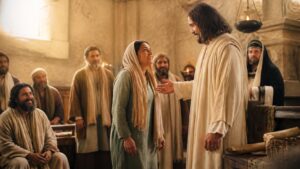
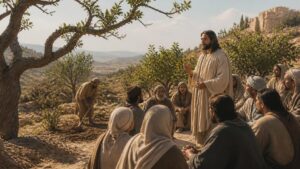
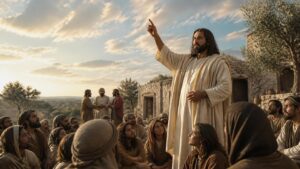
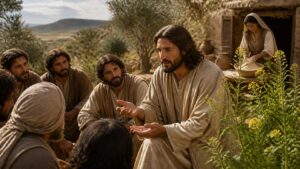
In the Gospel of Luke, Jesus tells two parables of small beginnings. “What is the Kingdom of God like? To what can I compare it? It is like a mustard seed that a person took and planted in a garden. When fully grown, it became a large bush, and the birds of the sky dwelt in its branches.” Then: “It is like yeast that a woman took and mixed in with three measures of flour until the whole batch of dough was leavened.” The Kingdom starts small. It is hidden. It works silently. But it transforms everything.
The connection is clear. Marriage is like the mustard seed. It begins with a vow, a promise, a seed planted in the soil of two lives. It is like the yeast. It works hidden in the dough of daily life—the meals shared, the dishes washed, the arguments forgiven, the sacrifices made without recognition. And if it is faithful, it leavens everything. It becomes a sign of the Kingdom. It becomes a place where God dwells.
Pope Francis has said, “The family is the domestic church, the place where the Kingdom of God begins. In the love of husband and wife, the world sees a glimpse of the love of Christ.” Saint John Paul II, in his apostolic exhortation Familiaris Consortio, wrote, “The family is the first and vital cell of society, a school of love and a sanctuary of life.” And Saint Louis and Saint Zélie Martin, the parents of Saint Thérèse of Lisieux, show us what this looks like. They were not perfect. They suffered loss, faced trials, and carried burdens. But they loved. And their love produced a saint—a Doctor of the Church.
What does this mean for us? We are called to see the Kingdom in the ordinary. We are called to be yeast—hidden, humble, transforming. We are called to love as Christ loves: sacrificially, faithfully, patiently. Whether we are married or single, we are all called to self-gift. We are all called to be a sign of the Kingdom.
Today, let us examine our hearts. Is our love like yeast—working quietly and transforming? Or is it like a stone—hard and unmoving? Let us ask the Lord to make us yeast in the dough, a mustard seed in the garden, a living sign of His Kingdom.
For the Kingdom is not far away. It is here. It is now. It is rising in your kitchen. Amen.
May God bless you all!