
Twenty-fifth Sunday in Ordinary Time (A), September 20, 2026
The Generosity of God and the Unsearchable Mind
Isa 55:6-9, Psalm: 144, Phil 1:20c-24.27a, Mt 20:1-16a
My dear Sisters and Brothers in Christ,
Today, the Word of God invites us to contemplate a mystery that lies at the very heart of our faith: the boundless generosity of God and the unsearchable nature of His ways. The prophet Isaiah calls us to seek the Lord while He may be found. Saint Paul declares that to live is Christ and to die is gain. And Jesus tells a parable that shatters our human notions of fairness and reward.
In the Book of Isaiah, the Lord speaks through the prophet, saying, “Seek the Lord while he may be found, call him while he is near.” God is not distant; He is near. He invites us to turn to Him, to abandon our own ways and thoughts, and to embrace His. “For my thoughts are not your thoughts, nor are your ways my ways, says the Lord. As high as the heavens are above the earth, so high are my ways above your ways and my thoughts above your thoughts.” This is the comfort and the challenge of our faith. God’s ways are not our ways. His mercy is not our mercy. His timing is not our timing.
In the Letter to the Philippians, Saint Paul writes from prison, facing the possibility of death. He is torn between two desires: to depart and be with Christ, which is far better, or to remain in the flesh for the sake of the Philippians. Paul’s perspective is radically different from the world’s. He does not see death as a defeat; he sees it as gain. He does not see life as an end in itself; he sees it as an opportunity to serve Christ. His words echo the teaching of Jesus: “Whoever loses his life for my sake will find it.”
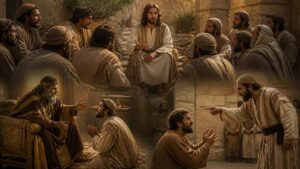
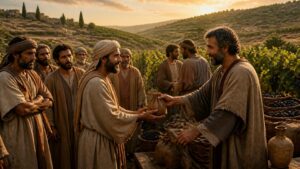
In the Gospel of Matthew, Jesus tells the parable of the laborers in the vineyard. The landowner hires workers throughout the day—some early in the morning, some at noon, some in the late afternoon. At the end of the day, he pays them all the same wage. Those who worked the longest grumble. They think they deserve more. But the landowner replies, “I am not cheating you. Did you not agree with me for the usual daily wage? I am free to do as I please with my money. Are you envious because I am generous?”
The parable is a lesson in the nature of grace. Grace is not a wage; it is a gift. The kingdom of God does not operate on the logic of merit; it operates on the logic of mercy. Those who come late are welcomed as warmly as those who have been faithful from the beginning. The ones who feel they have earned God’s favor are often the ones who grumble the most. The ones who know they are unworthy are the ones who are most grateful.
Pope Francis has said, “God’s justice is mercy. He does not pay us according to our merits, but according to His goodness.” Saint John Paul II, in his encyclical Dives in Misericordia, wrote, “Mercy is the greatest attribute of God, and it is the mission of the Church to bring that mercy to the world.” And Saint Thérèse of Lisieux, the Little Flower, understood this mystery perfectly: “I understood that Love alone made the Church’s members act. If Love ever went out, the apostles would no longer preach the Gospel, the martyrs would refuse to shed their blood.”
What does this mean for us? We are the workers in the vineyard, called at different hours, given different tasks, and paid the same wage: eternal life. We are called to seek the Lord while He may be found, to trust in His goodness, and to rejoice in His generosity. We are called to let go of our comparisons, our resentments, and our sense of entitlement. We are called to be grateful for the grace we have received, and to extend that grace to others.
Today, let us examine our hearts. Are we grumbling at God’s generosity? Are we jealous of those who seem to have received more than they deserve? Let us remember that we are all beggars at the feast of mercy. Let us rejoice in the goodness of the Landowner, who gives to all, not according to their merits, but according to His love. For His thoughts are not our thoughts, and His ways are not our ways. And that is our greatest comfort. Amen.
May God bless you all!