
Saturday of the Twenty-sixth Week in Ordinary Time, October 3, 2026

From Ashes to Abundance: The Joy of Seeing and the Fruit of Repentance
Job 42:1-3.5-6.12-16, Psalm: 118, Lk 10:17-24
My dear Sisters and Brothers in Christ,
The Book of Job concludes with a stunning transformation. Job, who has suffered immensely and questioned God, finally encounters the Lord in a personal way. He declares, “I had heard of you by word of mouth, but now my eye has seen you.” This is not just an intellectual understanding; it is a personal encounter. Job repents in dust and ashes, and the Lord restores his fortunes, giving him twice as much as he had before. In the Gospel, the disciples return with joy, having experienced the power of Jesus’ name. Jesus rejoices in the Holy Spirit and thanks the Father for revealing the mysteries of the Kingdom to the little ones.
In the Book of Job, we see the progression from suffering to glory. Job’s trials were not the end of his story. He had heard of God, but now he sees Him. His encounter with God leads to repentance, and his repentance leads to restoration. The Lord blesses Job with double what he had before—fourteen thousand sheep, six thousand camels, a thousand yoke of oxen, and a thousand donkeys. He also gives him seven sons and three daughters. Job’s latter days are more blessed than his former days. This is a testament to the mercy and generosity of God.
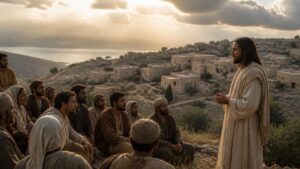
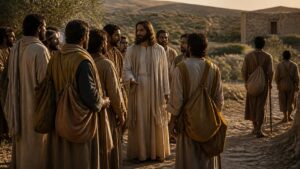
In the Gospel of Luke, the seventy-two disciples return with joy. They say, “Lord, even the demons are subject to us because of your name.” Jesus responds, “I have observed Satan fall like lightning from heaven.” He gives them authority over the enemy, but He also redirects their joy: “Do not rejoice because the spirits are subject to you, but rejoice because your names are written in heaven.” The disciples’ joy is not in their power, but in their salvation. Jesus rejoices in the Holy Spirit and thanks the Father for revealing these things to the little ones, hiding them from the wise and the learned.
The connection between the readings is the joy of encountering God. Job sees God and repents. The disciples see the power of God and rejoice. Both are transformed by the encounter. Both receive a gift that is greater than what they had before. Job receives double restoration. The disciples receive the assurance that their names are written in heaven.
Pope Francis has said, “The joy of the Gospel fills the hearts and lives of all who encounter Jesus.” Saint John Paul II, in his apostolic letter Novo Millennio Ineunte, wrote, “The saints have always been the source and origin of renewal in the most difficult moments in the Church’s history.”
What does this mean for us? We are called to encounter God, to see Him with the eyes of faith, and to experience the joy of salvation. We are called to repent of our sins and to trust in His mercy. We are called to rejoice not in our own power, but in the assurance that our names are written in heaven. We are called to be like Job, who suffered but was restored, and like the disciples, who rejoiced in the power of Jesus’ name.
Today, let us examine our hearts. Are we seeking an encounter with God? Are we repenting of our sins? Are we rejoicing in our salvation? Let us ask the Lord to reveal Himself to us, to give us the joy of the Gospel, and to restore to us the joy of our salvation. For the same God who restored Job’s fortunes and gave the disciples power over demons is the same God who loves us and desires our joy. Amen.
May God bless you all!