
Friday of the Eighth Week in Ordinary Time, May 29, 2026
The Fig Tree, the Temple, and the Faithful Pope
Voice over by Bro Paschal
1Pt 4:7-13, Psalm: 95, Mk 11:11-25
Memorial of Saint Paul VI, Pope
My dear Sisters and Brothers in Christ,
On this Memorial of Pope Saint Paul VI, a pontiff who guided the Church through the tumultuous years after the Second Vatican Council, the Word of God speaks of fruitfulness, prayer, and the purifying fire of suffering. The fig tree that Jesus cursed bore leaves but no fruit. The temple that Jesus cleansed had become a den of thieves. And Peter, writing to the early Church, warns that judgment begins with the household of God, calling us to love, to hospitality, and to rejoicing in suffering. Saint Paul VI lived these truths. He was a fig tree that bore abundant fruit, a temple cleansed by the Cross, and a witness who rejoiced even in the midst of profound misunderstanding.
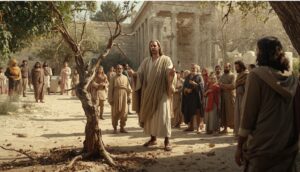
In the Gospel of Mark, Jesus is hungry and approaches a fig tree covered with leaves. He finds nothing but leaves. There is no fruit. He curses it, and by morning it is withered. This is a prophetic act. The fig tree represents Israel—beautiful in appearance, abundant in religious observance, but barren of the fruit that God desires: justice, mercy, and faith. Jesus then enters the temple and drives out the money changers, overturning tables. “Is it not written, ‘My house shall be called a house of prayer for all nations’? But you have made it a den of thieves.” The temple, meant to be a place of encounter with God, had become a place of commerce and corruption.
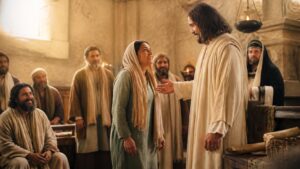
Then Jesus teaches about faith and forgiveness. “Have faith in God,” He says. “When you stand to pray, forgive anyone against whom you have a grievance, so that your heavenly Father may forgive your transgressions.” Prayer without forgiveness is empty. Faith without works is dead.
Saint Peter, in his first letter, echoes this call to fruitful living. “The end of all things is at hand. Therefore, be serious and sober for prayers.” Love covers a multitude of sins. Offer hospitality without grumbling. Serve with the strength God supplies. And then comes the shocking command: “Rejoice to the extent that you share in the sufferings of Christ, so that when his glory is revealed you may also rejoice exultantly.” Suffering is not a sign of God’s absence; it is a share in Christ’s own passion.
Pope Saint Paul VI understood this deeply. He inherited a Church in crisis—the aftermath of Vatican II, the rise of secularism, the revolt against authority. He bore the weight of the papacy with a gentle but unwavering fidelity. When he wrote *Humanae Vitae*, reaffirming the Church’s teaching on contraception, he knew the world would reject him. He was mocked, vilified, and dismissed. Yet he did not curse the fig tree of the Church; he nourished it. He did not abandon the temple; he cleansed it with the truth. And he forgave. His famous motto, *Cum Ipso*—“With Him”—meant that he walked with Christ, even when the path led through suffering.
Pope Francis, canonizing Paul VI, called him “the pope of the modern era” who “had the courage to proclaim the truth, even when it was unpopular.” Saint John Paul II, his successor, said, “He taught us to love the Church, even when she is difficult.”
For us today, the message is clear. We are called to be fig trees that bear fruit—not just leaves of religious practice, but the fruit of love, mercy, and justice. We are called to be temples of prayer, not dens of commercial transaction with God. We are called to forgive because we have been forgiven. And when suffering comes—as it will for those who follow Christ—we are called to rejoice, because we share in the sufferings of Christ, the prelude to glory.
Saint Paul VI, pray for us. Teach us to be faithful, fruitful, and forgiving. And help us to say, with you, *Cum Ipso*—with Him, and in Him, and through Him, now and forever. Amen.
May God bless you all!