Monday of the Sixteenth Week in Ordinary Time, July 20, 2026
The Simple Path and the Greater Sign
Mic 6:1-4.6-8, Psalm: 49, Mt 12:38-42
My dear Sisters and Brothers in Christ,
The prophet Micah presents us with a courtroom drama. The Lord pleads His case against His people. He asks, “O my people, what have I done to you? How have I wearied you? Answer me!” He reminds them of His saving acts—delivering them from Egypt, sending Moses, Aaron, and Miriam to lead them. The people, convicted, ask what they can offer to appease God. “Shall I come before him with burnt offerings, with calves a year old? Will the Lord be pleased with thousands of rams, with rivers of oil?” And then comes the answer—simple, profound, and eternal: “You have been told, O mortal, what is good, and what the Lord requires of you: Only to act justly, to love mercy, and to walk humbly with your God.”
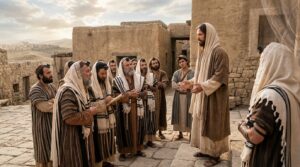
In the Gospel, the scribes and Pharisees demand a sign from Jesus. They have seen His miracles, heard His teaching, witnessed His compassion. But they want more—a spectacular sign, a divine spectacle on their terms. Jesus refuses. He offers them only the “sign of Jonah”: as Jonah was in the belly of the whale for three days, so the Son of Man will be in the heart of the earth. Then He contrasts their unbelief with the faith of the Ninevites, who repented at Jonah’s preaching, and the Queen of the South, who traveled far to hear Solomon’s wisdom. “There is something greater than Jonah here,” Jesus declares. “There is something greater than Solomon here.”
The connection between Micah and the Gospel is the question of what God truly desires. Micah strips away the elaborate rituals, the thousands of sacrifices, the rivers of oil. God does not want more offerings; He wants transformed lives. Justice, mercy, and humility—these are the sacrifices that please Him. The scribes and Pharisees, by contrast, are caught up in the external. They demand a sign, but they miss the Sign standing before them. They are expert in ritual but blind to the heart of the law.
Pope Francis has said, “The Lord requires us to act justly, to love mercy, and to walk humbly with Him. This is not a suggestion; it is the heart of the Gospel.” Saint John Chrysostom, reflecting on the sign of Jonah, wrote, “The Ninevites repented at the preaching of Jonah, but the Jews did not repent at the preaching of Christ. The Queen of the South traveled from the ends of the earth to hear Solomon, but they would not listen to the Son of God.” And Saint Augustine, contemplating the simplicity of Micah’s message, said, “The whole of the Christian life is contained in these three things: to do no wrong, to forgive wrong, and to be humble.”
What does this mean for us? We are tempted to complicate the faith. We ask for signs, for extraordinary experiences, for dramatic interventions. We focus on external observances while neglecting the weightier matters of justice, mercy, and humility. We can become like the Pharisees—religiously active but spiritually blind. Micah calls us back to the essentials. The Lord does not ask for our impressive offerings; He asks for our hearts. Justice means treating others with fairness and dignity. Mercy means forgiving as we have been forgiven. Humility means walking with God in trust, not pride.
This week, let us examine our lives. Are we pursuing justice in our relationships? Are we showing mercy to those who have wronged us? Are we walking humbly with God—listening, obeying, trusting? Let us not demand signs from heaven. The greatest sign has already been given: the death and resurrection of Christ. And the greatest response is not elaborate ritual, but a life of justice, mercy, and humility. Amen.
May God bless you all!