
Myanmar Cardinal Urges Christian Leaders to Be Peacemakers in Digital Age
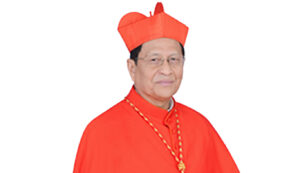
His Eminence Cardinal Charles Bo delivered a keynote address on August 24, 2026, in Assisi, Italy, calling on Christian leaders to become effective Christ-centered peacemakers in the digital era.
The Cardinal spoke at a gathering of Christian lawmakers and political leaders gathered in Assisi, addressing the urgent challenges posed by artificial intelligence and the imperative of building peace.
A Civilisational Crossroads
Cardinal Bo opened by thanking the organizers for the invitation to speak, noting his background as a shepherd from “a very suffering, poor country.” He drew inspiration from St. Francis of Assisi, whose sacred ground the gathering occupied.
“St. Francis, born into a family of wealth and influence, refused to weaponize either but chose to celebrate life with animals, the poor, and to embrace complete powerlessness,” the Cardinal said.
He posed a troubling question: “Is AI a tool in the hands of humanity for greater peace or a weapon in the hands of the arrogant and toxic power to inflict more agony on the innocents?”
Pope Leo XIV’s Encyclical
Cardinal Bo referenced Pope Leo XIV’s landmark social encyclical “Magnifica Humanitas: On Safeguarding the Human Person in the Time of Artificial Intelligence,” issued on May 25, 2026. The encyclical was deliberately timed to commemorate the 135th anniversary of Pope Leo XIII’s “Rerum Novarum.”
“Today, we confront a revolution not of steam and iron, but of mind and data,” the Cardinal said.
He warned that humanity faces a stark choice, echoing the biblical story of the Tower of Babel. “All attempts to build a new tower of Babel, driven by profit-driven optimization and domination, would fail,” he said.
Three Pillars for Peace
The Cardinal proposed three pillars for building genuine peace in the digital age.
Pillar 1: No War
Cardinal Bo called for an absolute rejection of automated warfare. He quoted Pope Leo XIV’s declaration that “there is no algorithm that can make war morally acceptable.”
“To automate the battlefield is to lower the moral threshold for violence, stripping conflict of human conscience,” he said. He urged representatives to champion “an immediate, binding international ban on fully autonomous lethal weapons.”
Pillar 2: Peace for All
The Cardinal emphasized that peace is not merely the absence of war but “justice at work.” He warned that algorithmic polarization creates what the encyclical calls a “Silicon Curtain” that divides human communities.
“Your faith is not a private luxury to be hidden away; it is a public covenant to build peace in a world tearing at the seams,” he told the representatives.
Pillar 3: Prosperity for All
The Cardinal warned that AI has brought immense prosperity to a select few while leaving billions at risk of economic injustice. “Everything is commodified in AI: human labor, desire, emotions, our secret thoughts,” he said.
He called on leaders to resist the transhumanist urge to treat the human person as something to be perfected or discarded based on utility.
A Call to Action
Cardinal Bo revealed that Silicon Valley pioneers, including Anthropic co-founder Christopher Olah, had welcomed the Church’s moral intervention. They admitted they cannot self-regulate and are looking to legislators to draw hard moral boundaries.
“The architects of our digital future are begging for governance,” the Cardinal said. “If you refuse to regulate, you are abdicating your sovereign duty to the people who elected you.”
He concluded with words of hope, quoting St. Francis: “All the darkness in the world cannot extinguish the light of a single candle.”
“Let your governance be that candle,” he urged. “Establish binding legal guardrails, demand corporate transparency, reject the automation of human slaughter, and ensure that technology remains entirely subservient to the magnificent humanity that God has entrusted to our care.”
By RVA Myanmar Service