
Sixteenth Sunday in Ordinary Time (A), July 19, 2026
The Patient Harvest: Trusting the Spirit in the Weeds
Wis 12:13.16-19, Psalm: 85, Rom 8:26-27, Mt 13:24-43
My dear Sisters and Brothers in Christ,
The parable of the wheat and the weeds is one of the most consoling and challenging teachings of Jesus. It speaks directly to our experience of a world that seems mixed—good and evil intertwined, grace and sin side by side. We see it in society, in the Church, and in our own hearts. And we ask, “Why does God allow this? Why doesn’t He just pull up the weeds?” The answer is found in the mercy of God, the patience of the harvest, and the quiet work of the Spirit.
The Book of Wisdom proclaims the grandeur of God’s justice and mercy. “There is no god besides you who has the care of all, so that you need to show you have not unjustly condemned.” God’s power is the source of His mercy. He is strong, yet He judges with clemency. He governs us with great lenience, “for those who are just must be kind; and you gave your children good ground for hope that you would permit repentance for their sins.” This is the heart of God: justice tempered by mercy, power expressed as patience. He does not crush the sinner; He waits for repentance.
Saint Paul, in the Letter to the Romans, reveals the secret of our endurance: “The Spirit comes to the aid of our weakness; for we do not know how to pray as we ought, but the Spirit himself intercedes with inexpressible groanings.” We are not left to our own devices. When we cannot see the purpose of the weeds, when we struggle to make sense of the evil and suffering in our midst, the Holy Spirit prays within us. The groanings of the Spirit are the prayer of the Church, the voice of creation waiting for redemption, the cry of the saints for the coming of the Kingdom.
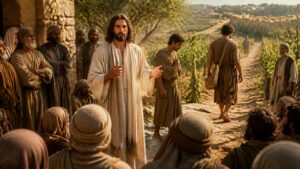
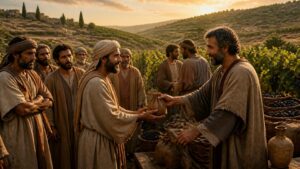
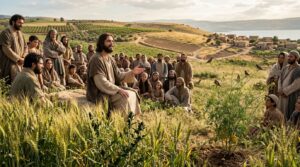
This brings us to the Gospel, where Jesus tells the parable of the wheat and the weeds. A sower sows good seed in his field. But an enemy comes and sows weeds among the wheat. The servants ask, “Do you want us to go and pull them up?” The master replies, “No, if you pull up the weeds, you might uproot the wheat along with them. Let them grow together until harvest.” The patience of the master is not indifference; it is wisdom. He knows that premature judgment would harm the good. At the harvest, the weeds will be gathered and burned, and the wheat will be gathered into the barn.
Jesus then explains the parable: the sower is the Son of Man; the field is the world; the good seed is the children of the Kingdom; the weeds are the children of the evil one; the enemy is the devil; the harvest is the end of the age; the reapers are the angels. At the end, the Son of Man will send His angels to gather all causes of sin and evildoers, and the righteous will shine like the sun in the Kingdom of their Father.
The parable is a powerful lesson in patience and trust. The Church is not a museum of saints; it is a field of both wheat and weeds. We are not to spend our energy rooting out the weeds—judging, condemning, dividing. We are to focus on becoming good wheat, growing in holiness, and trusting the Lord of the harvest. The final judgment belongs to God alone.
Pope Francis has said, “The Church is not a customs house; it is the house of the Father, where there is room for everyone with all their problems.” Saint Augustine, reflecting on this parable, wrote, “In this life, the wheat and the weeds grow together. The Church is a field of both, and the separation will come only at the judgment.” And Saint John Chrysostom, commenting on the Spirit’s intercession, said, “The Spirit prays in us when we are weak, and His prayer is always heard by the Father.”
What does this mean for us? We live in the tension between the “already” and the “not yet.” The Kingdom is already present in the Church, in the Eucharist, in the lives of the saints. But it is not yet fully realized. We see the weeds—sin, division, suffering—and we are tempted to despair or to become judgmental. But the Lord invites us to trust in His patience and to rely on the Spirit’s intercession. We are called to grow in holiness, not by uprooting others, but by bearing fruit ourselves.
This week, let us ask the Spirit to help us pray. Let us entrust the weeds—in the world, in the Church, and in our own hearts—to the Lord of the harvest. And let us live as wheat, not as weeds, bearing the fruit of patience, kindness, and trust. For the harvest is coming, and the righteous will shine like the sun in the Kingdom of their Father. Amen.
May God bless you all!