Twenty-ninth Sunday in Ordinary Time (A), October 18, 2026
Whose Image Is on Your Coin? The God Who Calls Us by Name
Isa 45:1.4-6, Psalm: 95, 1Thess 1:1-5b, Mt 22:15-21
My dear Sisters and Brothers in Christ,
The Word of God today presents us with two powerful truths that, at first glance, seem unrelated. The prophet Isaiah reveals that God is the Lord of history, who anoints even foreign kings for His purposes and calls His people by name. Saint Paul gives thanks for the Thessalonians, whose faith, hope, and love have become a model for all believers. And in the Gospel, Jesus delivers the most famous answer in history: “Repay to Caesar what belongs to Caesar and to God what belongs to God.”
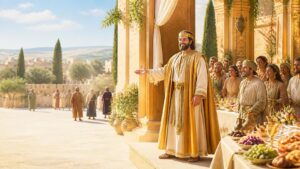
In the Book of Isaiah, God speaks through the prophet to Cyrus, the pagan king of Persia. This is astonishing. God calls Cyrus “his anointed,” his instrument, even though Cyrus does not know Him. “For the sake of Jacob, my servant, of Israel my chosen one, I have called you by your name, giving you a title, though you knew me not.” God uses whom He wills, when He wills, for purposes we cannot always see. He is the Lord of all creation, the one “who forms the light and creates darkness, who makes weal and creates woe.” There is no other God but Him. And He calls each of us by name.
Saint Paul, in his Letter to the Thessalonians, gives thanks for a community that has become a model of faith. “We give thanks to God always for you all, remembering you in our prayers.” Paul remembers their “work of faith and labor of love and endurance in hope.” These are not abstract virtues; they are the fruit of the Gospel received “in power and in the Holy Spirit and with much conviction.” The Thessalonians heard the Word and responded with their lives. Their example spread throughout the region.
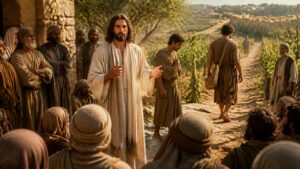
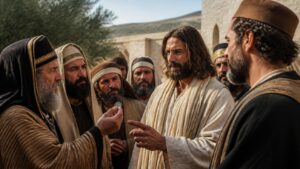
In the Gospel, the Pharisees try to trap Jesus with a question about taxes. They bring a Roman coin and ask, “Is it lawful to pay the census tax to Caesar or not?” Jesus sees the trap. He asks for the coin and says, “Whose image and inscription is this?” They answer, “Caesar’s.” He replies, “Repay to Caesar what belongs to Caesar and to God what belongs to God.” The coin bears Caesar’s image; it belongs to him. But you and I bear God’s image. We belong to God.
The connection between the readings is the call to recognize God’s sovereignty over all things. Isaiah shows that God is the Lord of history, who calls even pagan kings by name. Paul shows that God is the Lord of the Church, who gathers a community of faith, hope, and love. Jesus shows that God is the Lord of the human heart, which bears His image and belongs to Him. The question is not, “Should we pay taxes?” The question is, “Whose image do we bear?” The coin has Caesar’s image. But we have God’s.
Pope Benedict XVI, reflecting on this Gospel, said, “Jesus’ answer to the Pharisees is a reminder that our ultimate allegiance is to God alone. The state has its legitimate authority, but the human person belongs to God.” Pope Francis has said, “We are citizens of heaven, pilgrims on earth. Our true treasure is not in the things of this world but in the love of God.”
What does this mean for us? We are called to live as citizens of two kingdoms—the earthly city and the City of God. We pay our taxes, we fulfill our civic duties, we respect legitimate authority. But our ultimate allegiance is to God. We bear His image. We belong to Him. And we are called to give Him what is His: our hearts, our minds, our souls, our lives.
Today, let us examine our hearts. Do we give to Caesar what is Caesar’s and to God what is God’s? Do we recognize that we bear the image of God and belong to Him? Let us ask the Lord to give us the grace to live as faithful citizens of heaven, giving to God what is His, and trusting in His providence over all things. Amen.
May God bless you all!