
Twenty-third Sunday in Ordinary Time (A), September 6, 2026
Watchmen and Debtors of Love: The Sacred Duty of Fraternal Correction
Ezek 33:7-9, Psalm: 94, Rom 13:8-10, Mt 18:15-20
My dear Sisters and Brothers in Christ,
Today, the Church presents us with a profound teaching on responsibility, love, and the power of community. The prophet Ezekiel is appointed as a watchman for the house of Israel. Saint Paul declares that love is the fulfillment of the law. And Jesus gives us a practical way to address sin in the community. These readings call us to a deeper understanding of our duty to one another and the power of God’s love working through us.
In the Book of Ezekiel, the Lord says, “You, son of man, I have appointed a watchman for the house of Israel. When you hear a word from my mouth, you shall warn them for me.” Ezekiel is given a sacred responsibility: to speak the truth, to warn the wicked, to call the people to repentance. If he fails to warn them, their blood will be on his hands. This is a sobering call to accountability. We are not called to be passive observers of sin; we are called to be watchmen, to speak the truth in love, and to warn our brothers and sisters of the consequences of their actions.
Saint Paul, in the Letter to the Romans, gives us the motive for this watchfulness: “Owe nothing to anyone, except to love one another.” Love is not a feeling; it is a debt we owe to every person we encounter. It is the fulfillment of the law. “Love does no evil to the neighbor; hence, love is the fulfillment of the law.” When we speak the truth, when we warn the sinner, when we correct the wayward, we are not acting out of judgment; we are acting out of love. We are trying to save a brother or sister from the consequences of their sin.
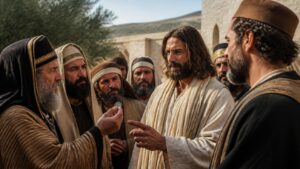
In the Gospel of Matthew, Jesus gives us a practical method for fraternal correction. “If your brother sins against you, go and tell him his fault between you and him alone. If he listens to you, you have won over your brother.” This is the first step: private, gentle, and personal. If that fails, take one or two others. If that fails, tell it to the Church. And if he refuses to listen to the Church, treat him as a Gentile or a tax collector—not as an enemy, but as someone who is still outside the community, still in need of mercy. Then Jesus makes a promise: “Whatever you bind on earth shall be bound in heaven, and whatever you loose on earth shall be loosed in heaven.” The power of forgiveness and reconciliation is given to the community.
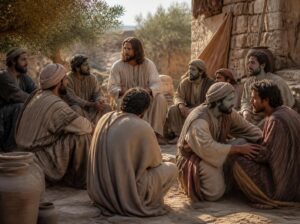
This is the heart of the Christian life: we are responsible for one another. We are our brother’s keeper. We are called to speak the truth, to warn the sinner, and to forgive the repentant. And we are called to pray for one another, for “where two or three are gathered in my name, there am I in the midst of them.”
Pope Benedict XVI, reflecting on this Gospel, said, “The Church is a community of sinners who are called to holiness. Fraternal correction is an act of love, not judgment.” Pope Francis has said, “The Lord invites us to be watchful, to care for one another, and to correct with love.” And Saint John Chrysostom wrote, “If you see a brother in sin, do not despise him, but pray for him. Do not judge him, but correct him with love.”
What does this mean for us? We are called to be watchmen, to speak the truth in love, and to correct with compassion. We are called to be debtors of love, owing nothing to anyone except love. We are called to be a community where sin is confronted, and forgiveness is offered. And we are called to pray for one another, trusting that Christ is present in our midst.
This week, let us examine our hearts. Are we willing to speak the truth to a brother or sister in sin? Are we willing to receive correction with humility? Are we willing to forgive as we have been forgiven? Let us ask for the grace to be faithful watchmen, to love without measure, and to build a community where Christ is truly present. Amen.
May God bless you all!