
“We Are the Church”: Myitkyina Priests Renew Faith at Annual Retreat
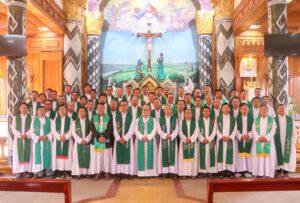
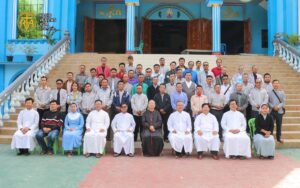
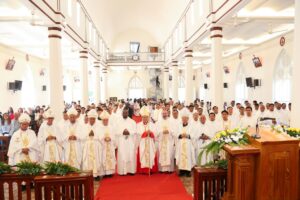
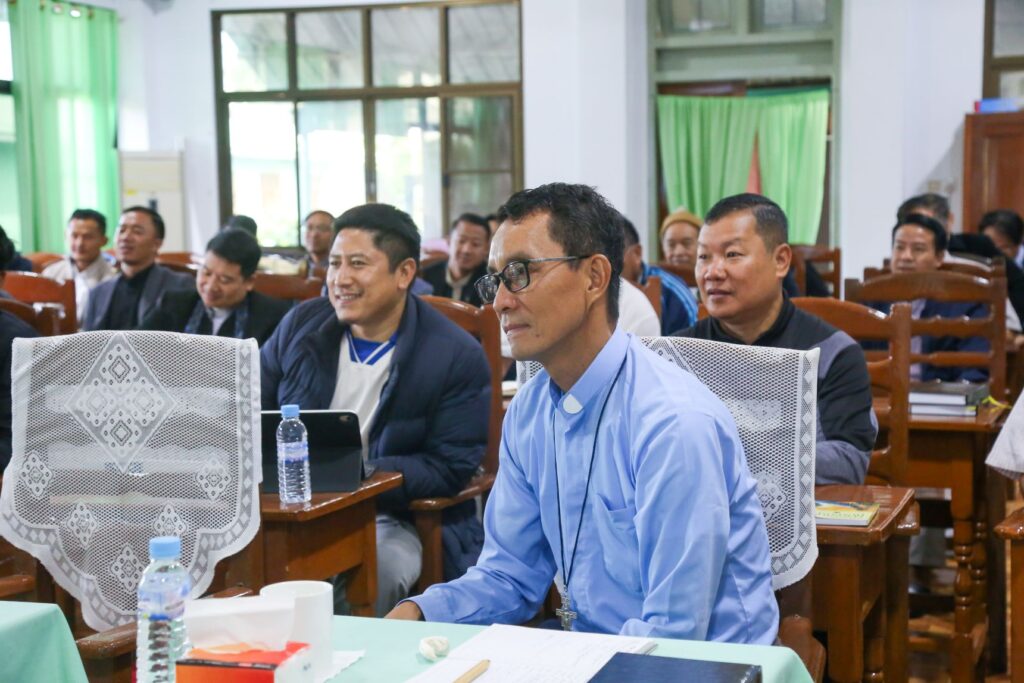
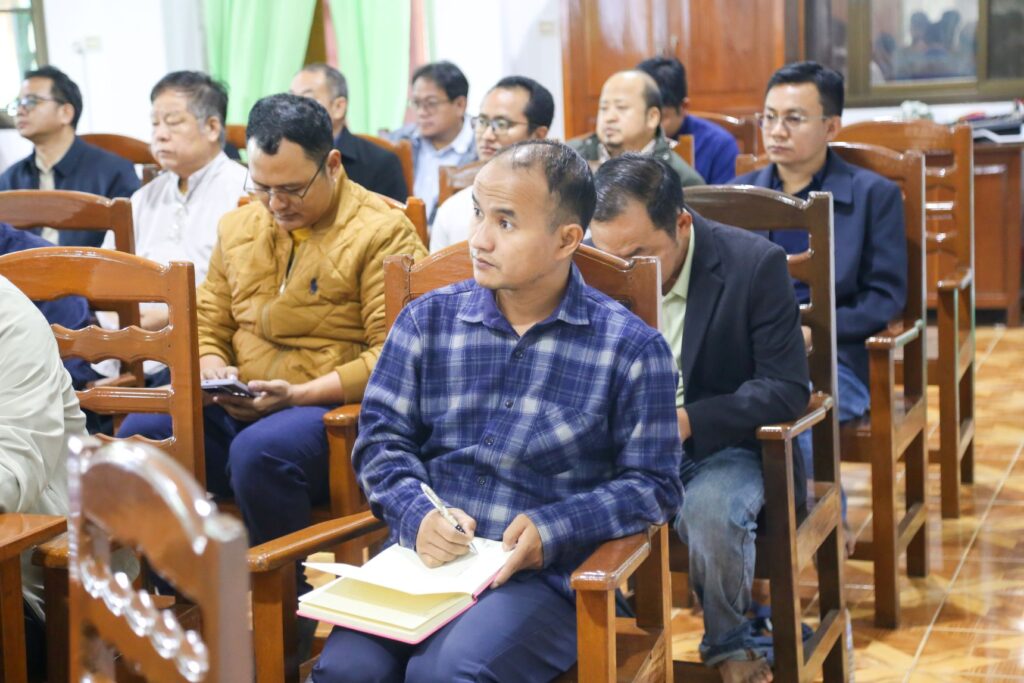
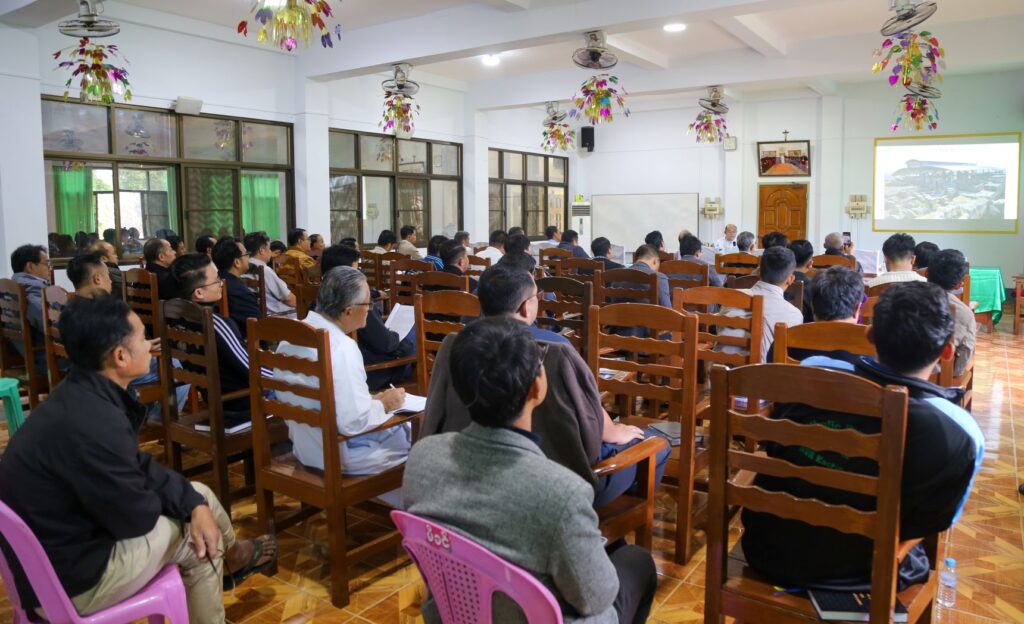
Priests of the Diocese of Myitkyina gathered for their annual retreat from November 15 to 19, 2026, under the theme “We Are the Church.”
Bishop Maurice Nyunt Wai of the Diocese of Mawlamyine led the five-day spiritual renewal, focusing on priestly spirituality, fidelity to Christ, and commitment to service.
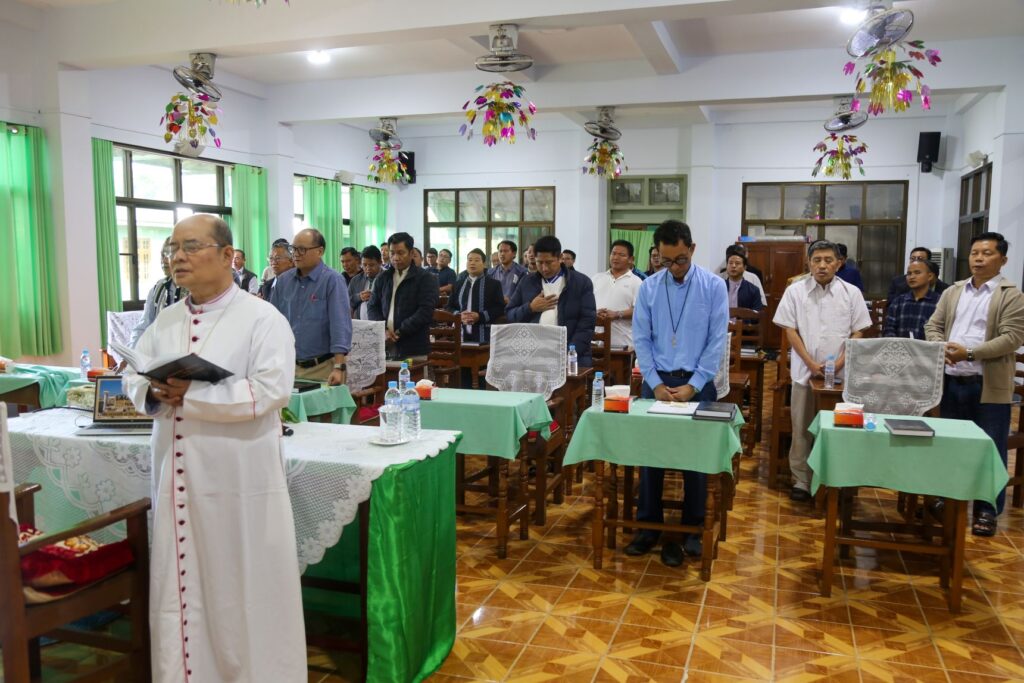
The retreat began on the evening of November 15 with an orientation session. Drawing from the Book of Revelation, Bishop Nyunt Wai guided the priests through the messages to the seven churches of Asia Minor: Ephesus, Smyrna, Pergamum, Thyatira, Sardis, Philadelphia, and Laodicea.
“We are the Church,” the bishop emphasized, reminding the priests that the Church is not merely a building but a living community united in Christ. He stressed that the messages to these early churches remain relevant today, calling everyone to repentance, faithfulness, and renewal.
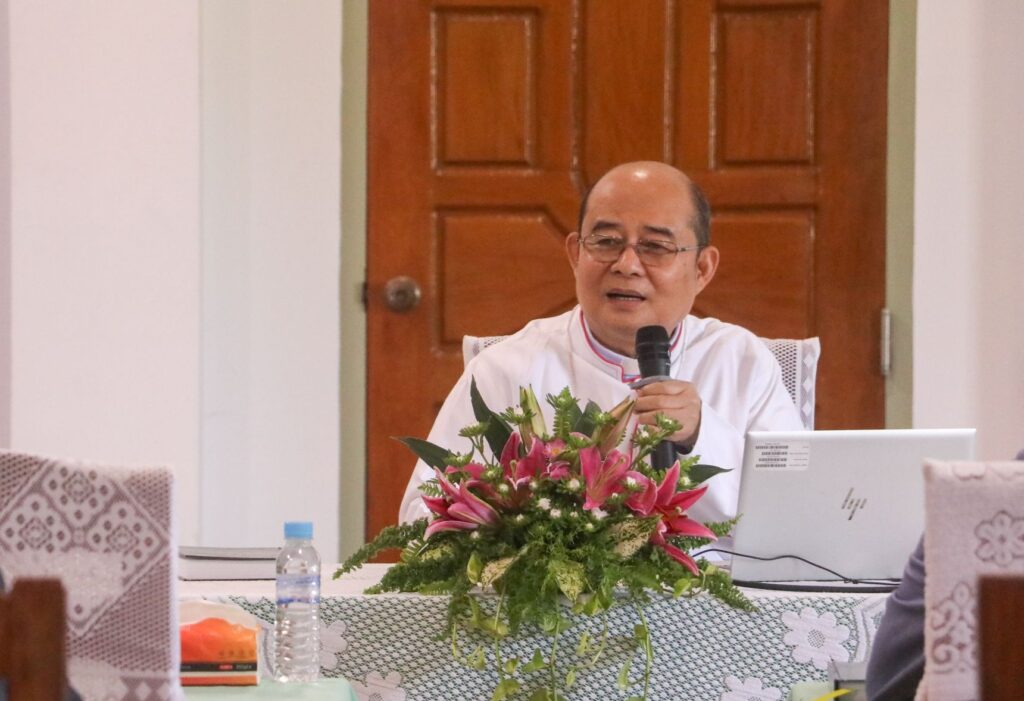
Using a PowerPoint presentation, Bishop Nyunt Wai showed photographs of the ancient ruins in present-day Türkiye, helping the priests connect the biblical accounts with their historical settings.
“The Book of Revelation is not about myths; it is about the past, the present, and the future,” he said, referring to Revelation 1:19.
Reflecting on the strengths, weaknesses, warnings, and promises in these messages, the bishop invited the priests to examine their personal lives, pastoral duties, and commitment to their vocation.
Fidelity and Celibacy
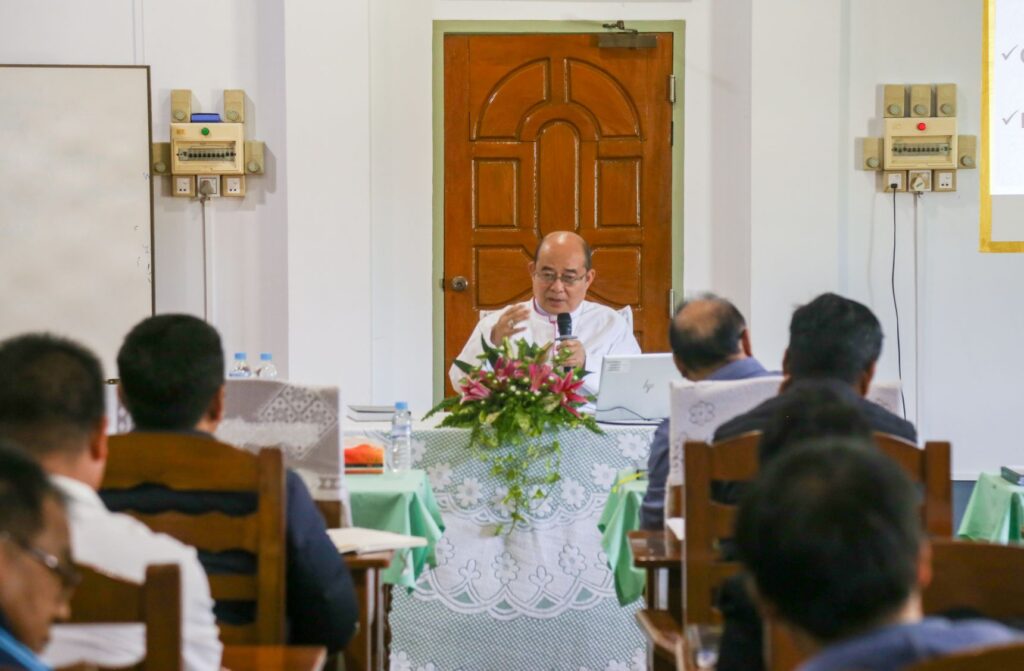
Bishop Nyunt Wai stressed that fidelity to Christ cannot be separated from faithfulness to His Church. He reflected on priestly celibacy as a form of “poverty of heart,” explaining that it goes beyond sexual abstinence and involves redirecting human desires toward generous, non-possessive love. Rather than suppressing human nature, celibacy calls priests to transform their capacity for love into selfless service.
He also warned against vanity, boasting, and worldly attitudes, recalling Pope Francis’ criticism of spiritual worldliness as a danger to the Church. Emphasizing human formation, he said a good priest must first recognize his own humanity, understand his personal history, and make peace with both his strengths and wounds.
A Call to Vigilance
Drawing lessons from the seven churches, Bishop Nyunt Wai warned against spiritual complacency, which can gradually weaken faith. He encouraged the priests to remain vigilant and renew their commitment to Christ despite challenges and personal weaknesses.
Quoting Revelation 2:25, he reminded them: “Nevertheless, hold firmly to that which you have until I come.”
He also highlighted the importance of prayer in priestly life, recalling a saying attributed to St. John Vianney: “There are no bad priests, only priests for whom there has not been enough prayer.”
Living Arks of the Covenant
In his concluding reflection, Bishop Nyunt Wai presented the Ark of the Covenant as an image of the priestly calling. He explained that the Ark contained the tablets of the Ten Commandments, Aaron’s staff, and the jar of manna. He then drew a parallel between these treasures and Jesus Christ, whom Mary carried in her womb.
Just as Mary bore Christ, the bishop reminded the priests that they too are called to become living bearers of God’s presence. Through the Eucharist, they receive Christ—the Word of God, the Bread of Life, and the eternal Priest. He described Christians as “living tabernacles,” called to carry Christ into the world.
Referring to 2 Corinthians 4:7, he reminded them of human fragility: “But we have this treasure in jars of clay to show that this all-surpassing power is from God and not from us.”
The retreat concluded with Eucharistic Benediction and a papal blessing. For the priests of Myitkyina, the five days offered a chance to deepen their relationship with Christ and rediscover their mission as bearers of God’s presence among the people they serve.
By RVA Lisu Service