Thirtieth Sunday in Ordinary Time (A), October 25, 2026
The Cry That Reaches Heaven: The Love That Fulfills the Law
Exod 22:20-26, Psalm: 17, 1Thess 1:5c-10, Mt 22:34-40
My dear Sisters and Brothers in Christ,
What does it mean to love God with all your heart, soul, and mind? The answer might surprise you. It is not found in the intensity of our emotions, the eloquence of our prayers, or the rigor of our observances. It is found in how we treat the most vulnerable among us. Today, the Word of God reveals that the two great commandments are not separate—they are two sides of the same coin. Love of God is proven by love of neighbor, and love of neighbor flows from love of God.
In the Book of Exodus, God gives Israel a series of laws that reveal His heart. “You shall not molest or oppress an alien, for you were once aliens yourselves in the land of Egypt. You shall not wrong any widow or orphan. If ever you wrong them and they cry out to me, I will surely hear their cry.” God is not indifferent to the suffering of the vulnerable. He hears their cry. He is their protector, their defender, their avenger. And then comes a stunning command: “If you take your neighbor’s cloak as a pledge, you shall return it to him before sunset; for this cloak of his is the only covering he has for his body. What else has he to sleep in? If he cries out to me, I will hear him; for I am compassionate.”
Here is the heart of God: compassion. The word in Hebrew is chanun—gracious, merciful, tender. God does not merely demand justice; He is moved by mercy. He hears the cry of the poor. He cares for the alien, the widow, the orphan, the day laborer. And He calls His people to do the same.
In his Letter to the Thessalonians, Saint Paul gives thanks for a community that had become a model of faith. They received the Gospel “with joy inspired by the Holy Spirit,” so that they became “an example to all the believers.” Their faith had a reputation. Word spread everywhere about their conversion—how they had turned from idols to serve the living and true God, and to await His Son from heaven. Their love was not just a feeling; it was a public witness. They loved God, and everyone could see it.
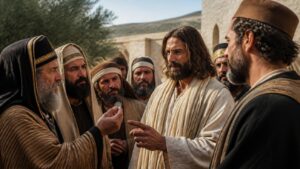
In the Gospel of Matthew, the Pharisees test Jesus with a question: “Teacher, which commandment in the law is the greatest?” Jesus answers by quoting the Shema: “You shall love the Lord, your God, with all your heart, with all your soul, and with all your mind.” Then He immediately adds Leviticus 19:18: “You shall love your neighbor as yourself.” And He concludes, “The whole law and the prophets depend on these two commandments.” Jesus does not say the second is optional. He says it is “like” the first. They are inseparable. To love God is to love what God loves—and God loves the poor.
Pope Benedict XVI, reflecting on the greatest commandment, said, “Love of God and love of neighbor are inseparable. They are two aspects of a single commitment.” Pope Francis has said, “The Lord asks us to love the poor, the alien, the widow, the orphan. To ignore them is to ignore Christ Himself.” And Saint John Chrysostom preached, “If you cannot see Christ in the poor man at your door, you will not see Him in the Eucharist on the altar.”
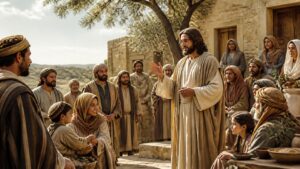
What does this mean for us? We are called to a love that is concrete. A love that does not just say, “God bless the poor,” but that acts—that returns the cloak before sunset, that does not oppress the alien, that listens to the cry of the widow. We are called to a love that is rooted in God’s own compassion. We are called to be a people whose faith is known everywhere, whose love is visible, and whose hearts are moved by the same mercy that moved the heart of Christ.
Today, let us examine our hearts. Do we see the vulnerable in our midst? Do we hear their cry? Do we act? The love of God is not a feeling; it is a choice. It is a commitment. It is a law written on our hearts. And when we love as God loves, we fulfill the whole law.
For the cry of the poor reaches heaven. And God hears. Amen.
May God bless you all!