Feast of the Exaltation of the Holy Cross, September 14, 2026
The Wood That Heals: Finding Glory in the Cross
Num 21:4b-9, Psalm: 77, Phil 2:6-11, Jn 3:13-17
My dear Sisters and Brothers in Christ,
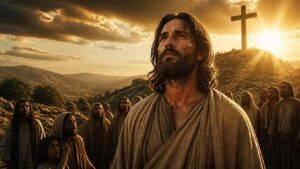
On this Feast of the Exaltation of the Holy Cross, the Church invites us to gaze upon the most paradoxical sign of our faith. We celebrate not a tragedy, but a victory. We exalt not an instrument of torture, but the throne of the King. The cross, which was once the ultimate symbol of shame and defeat, has become the ultimate symbol of love and salvation. Through the readings today, we are invited to understand why the cross is our glory and our hope.
In the Book of Numbers, the people of Israel are wandering in the desert. They grumble against God and against Moses. They complain, “Why have you brought us up from Egypt to die in this desert?” As a punishment for their lack of faith, the Lord sends serpents, and many of the people die. When they repent, the Lord instructs Moses to make a bronze serpent and mount it on a pole. “If anyone who has been bitten looks at it, he will recover.” The bronze serpent is a sign of judgment and healing. It is a foreshadowing of the cross: the instrument of death becomes the instrument of life.
In the Letter to the Philippians, Saint Paul gives us the great Christological hymn, a summary of the mystery of our salvation. “Jesus Christ, though he was in the form of God, did not regard equality with God as something to be grasped, but emptied himself, taking the form of a slave, coming in human likeness.” He humbled Himself, becoming obedient to the point of death, even death on a cross. Because of this, God exalted Him and gave Him the name above every name. The cross is the path to exaltation. The humiliation of Christ is the source of our glory.
In the Gospel of John, Jesus speaks to Nicodemus about the purpose of His coming. “Just as Moses lifted up the serpent in the desert, so must the Son of Man be lifted up, so that everyone who believes in him may have eternal life.” Then comes the most quoted verse in Scripture: “For God so loved the world that he gave his only Son, so that everyone who believes in him might not perish but might have eternal life.” The cross is the ultimate expression of God’s love. It is not a sign of God’s anger, but of His mercy. The Father did not send the Son to condemn the world, but to save it.
Pope Benedict XVI, reflecting on the cross, said, “The cross is the revelation of God’s love, the definitive proof that He loves us to the end.” Pope Francis has said, “The cross is the throne of God. It is from the cross that He reigns, and He reigns with love.” And Saint John of the Cross, whose name itself honors the cross, wrote, “In the evening of life, we will be judged on love.”
What does this mean for us? The cross is not just a historical event; it is a present reality. We are called to take up our cross daily and follow Christ. We are called to embrace the crosses of our lives—the difficulties, the disappointments, the sufferings—and to see them as opportunities to share in the love of Christ. The cross is not a burden to be endured; it is a gift to be embraced. It is the wood that heals, the sign of victory, the path to glory.
Today, let us examine our hearts. Do we see the crosses in our lives as burdens, or as opportunities to grow in love? Let us ask the Lord to give us the grace to embrace our crosses, to unite them to His, and to trust that the same wood that carried Him to death is the wood that carries us to eternal life. Amen.
May God bless you all!