Solemnity of the Body and Blood of Christ (A), June 7, 2026
The Bread That Makes Us One: Living the Eucharist
Deut 8:2-3.14b-16a; Psalm: 147; 1Cor 10:16-17; Jn 6,51-58
My dear Sisters and Brothers in Christ,
Today, the Church celebrates the Solemnity of the Most Holy Body and Blood of Christ—Corpus Christi. This is not a feast about a distant doctrine or a medieval devotion. It is a feast about the very heart of our life as Catholics. The Eucharist is not a symbol or a memorial meal. It is the living Christ, given to us as food, uniting us to Himself and to one another. Today, the readings lead us from the manna in the desert to the cup of blessing at the Lord’s table, and finally to the staggering words of Jesus: “Whoever eats my flesh and drinks my blood remains in me and I in him.”
In the Book of Deuteronomy, Moses reminds the people of Israel of their forty years in the wilderness. God led them through that harsh desert to test them and to reveal what was in their hearts. He let them hunger, and then He fed them with manna—a food unknown to their ancestors. Why? “To show you that not by bread alone does one live, but by every word that comes forth from the mouth of the Lord.” The manna was a gift, a daily miracle. But it was also a test. Would they trust God to provide? Would they gather only what they needed? And importantly, the manna could not give eternal life. Those who ate it still died. It was a sign, pointing to something greater.
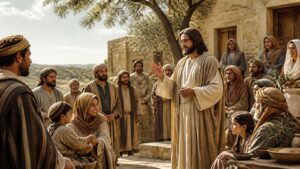
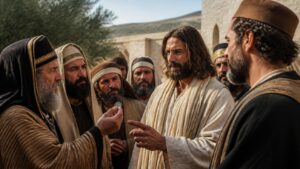
That greater gift is the Eucharist. In the Gospel of John, Jesus makes a claim that scandalized His listeners and continues to challenge the world. “I am the living bread that came down from heaven; whoever eats this bread will live forever; and the bread that I will give is my flesh for the life of the world.” The Jews quarreled, “How can this man give us his flesh to eat?” Jesus does not soften the teaching. He intensifies it: “Amen, amen, I say to you, unless you eat the flesh of the Son of Man and drink his blood, you do not have life within you.” This is not metaphor. This is the real presence. The bread we break is not a symbol of Christ’s body; it is His body. The cup we bless is not a reminder of His blood; it is His blood. As Saint Thomas Aquinas would later sing, “Sight, touch, taste are all deceived in their judgment of you, but hearing alone suffices firmly to believe.”
Saint Paul, in his first letter to the Corinthians, draws out the profound implication of this gift. “The cup of blessing that we bless, is it not a participation in the blood of Christ? The bread that we break, is it not a participation in the body of Christ? Because the loaf of bread is one, we, though many, are one body, for we all partake of the one loaf.” The Eucharist does not merely unite us to Christ; it unites us to one another. When we receive Communion, we are not solitary consumers of a private blessing. We are being configured into the Body of Christ, the Church. If we receive the Eucharist and then treat our brother with contempt, we contradict what we have received. If we receive the Eucharist and ignore the hungry at our door, we make a lie of the sacrament. The Eucharist is the source and summit of the Christian life, but it is also the seed of Christian unity and charity.
Pope Benedict XVI wrote, “The Eucharist is the sacrament of love. It is the gift that Jesus makes of himself, revealing to us his infinite love for each person.” Pope Francis adds, “The Eucharist is not a prize for the perfect, but the medicine for the weak and the food for the hungry.” Saint John Paul II called the Eucharist “the Bread of Hope,” reminding us that in the midst of a broken world, we receive the promise of eternal life.
What does this mean for our daily lives? First, we must approach the Eucharist with reverence and desire. Not as a routine, but as an encounter. Before receiving, we should prepare our hearts: examine our conscience, forgive those who have hurt us, and hunger for the Lord. Second, we must become what we receive. Saint Augustine famously said, “Become what you receive: the Body of Christ.” When we eat the Bread of Life, we are transformed into the living presence of Christ for the world. Our hands become His hands. Our feet become His feet. Our voice becomes His voice speaking mercy. Third, we must allow the Eucharist to break down the walls of division. In a world torn apart by politics, race, and ideology, the Eucharist proclaims that we are one body. The same Christ who feeds us also commands us to love one another as He has loved us.
The manna in the desert sustained the Israelites for a journey. The Eucharist is not merely for the journey; it is the destination in foretaste. It is heaven breaking into time. It is the food of angels given to pilgrims. Today, as we process with the Blessed Sacrament and kneel in adoration, let us renew our faith in the Real Presence. Let us ask for the grace to live what we receive. And let us go forth from this Mass as living tabernacles, carrying Christ into the streets, the workplaces, the homes of our daily lives. For the Bread that came down from heaven is not meant to be kept; it is meant to be shared. Amen.
May God bless you all!