The Solemnity of the Most Holy Trinity (A), May 31, 2026
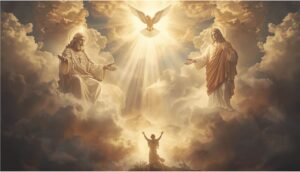
The God Who Is Love: Our Home and Our Hope
Voice over by Bro. Paschal
Exod 34:4b-6.8-9, Psalm: Dan 3, 2Cor 13:11-13, Jn 3:16-18
My dear Sisters and Brothers in Christ,
Today, the Church invites us to gaze upon the deepest mystery of our faith: the Most Holy Trinity. We do not celebrate an abstract doctrine or a mathematical puzzle. We celebrate the very life of God—Father, Son, and Holy Spirit—a life of eternal, perfect, self-giving love. And the stunning truth of this feast is that this God has invited us to share in that love. The Trinity is not a distant theological formula; it is our home.
In the Book of Exodus, the Lord descends in a cloud and proclaims His name: “The Lord, the Lord, a merciful and gracious God, slow to anger and rich in kindness and fidelity.” Moses bows to the ground and worships. He asks for forgiveness and for God to remain in their midst. This is the God of the Old Covenant: holy, yet merciful; majestic, yet near. But the revelation is not complete. The fullness of God’s mercy will be revealed in the Son and poured out through the Spirit.
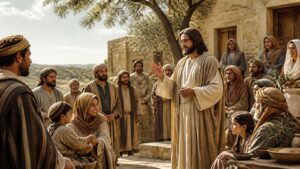
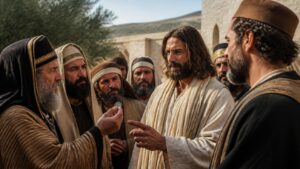
In the Gospel of John, we hear the most famous verse in all of Scripture: “God so loved the world that he gave his only Son, so that everyone who believes in him might not perish but might have eternal life.” The love of the Father is not a passive feeling; it is an active gift. He gives His Son. The Son is not sent to condemn, but to save. This is the heart of the Trinity: the Father loves, the Son saves, and the Spirit sanctifies. The love that circulates eternally between Father and Son spills over into creation. We are not spectators of that love; we are its beneficiaries.
Saint Paul, in his second letter to the Corinthians, gives us the most Trinitarian blessing in Scripture: “The grace of the Lord Jesus Christ, and the love of God, and the communion of the Holy Spirit be with all of you.” Grace from the Son, love from the Father, communion from the Spirit—this is the Christian life. We are not alone. We are not orphans. We are drawn into the very life of God.
The early Church Fathers, like Saint Augustine, struggled to articulate this mystery. One legend says Augustine was walking along the seashore, pondering the Trinity, when he saw a child trying to pour the entire ocean into a small hole in the sand. “You cannot do that,” Augustine said. The child replied, “And you cannot fit the mystery of the Trinity into your small mind.” Augustine understood: the Trinity is not meant to be fully comprehended, but to be worshipped and lived.
Pope Benedict XVI reflected: “The Trinity is not a problem to be solved, but a mystery to be contemplated.” Pope Francis adds: “The Trinity is not a closed circle; it is open, welcoming us into its embrace.”
What does this mean for us? It means that our God is not a solitary, distant monarch. He is a community of love. And we, created in His image, are made for relationship—with Him and with one another. When we love, we reflect the Trinity. When we forgive, we participate in the mercy of the Father. When we serve, we imitate the Son who came not to be served but to serve. When we console, we become instruments of the Holy Spirit, the Comforter.
This Trinity Sunday, let us not be overwhelmed by the mystery. Let us be comforted. The God who revealed Himself to Moses as merciful and gracious is the same God who gave His Son for us and who pours His Spirit into our hearts. We are not alone. We are loved. And we are invited to love in return.
Bow before the mystery. Receive the grace. Live the communion. For the Lord, the Lord, a merciful and gracious God, has made His dwelling among us—and has promised to dwell in us forever. Amen.
May God bless you all!