
Tuesday of the Eleventh Week in Ordinary Time, June 16, 2026

The King Who Repented: The Shocking Reach of Divine Mercy
1Kgs 21:17-29; Psalm: 50; Mt 5:43-48
My dear Sisters and Brothers in Christ,
The Scriptures today present us with a scandal—a scandal of divine mercy that should shake us to the core. In the first reading, the wicked King Ahab, who conspired to murder Naboth and steal his vineyard, hears the prophet Elijah’s sentence: “In the place where the dogs licked up the blood of Naboth, the dogs will lick up your own blood.” Ahab should be doomed. But then something astonishing happens. Ahab tears his garments, puts on sackcloth, and fasts. And God says to Elijah, “Have you seen how Ahab has humbled himself before me? I will not bring the evil in his time.” A murderer and thief repents—and God relents. In the Gospel, Jesus commands us to love our enemies and pray for those who persecute us. The two readings are one message: mercy is for everyone, even the worst of sinners, and we are called to extend that same shocking mercy to others.
The story of Ahab is a warning and a hope. Ahab was not a good man. He was weak, dominated by Jezebel, complicit in an innocent man’s death. By justice alone, he deserved destruction. Yet when faced with the truth—when Elijah confronted him—Ahab humbled himself. His repentance was not perfect; his heart was not fully transformed. But God saw the gesture, the tearing of garments, the fasting, and He responded with mercy. This does not excuse Ahab’s evil, but it reveals God’s character: “The Lord is gracious and merciful, slow to anger and abounding in steadfast love” (Ps 145:8). Ahab’s punishment was postponed. He was given another chance. That is the mercy that none of us deserves, but all of us need.
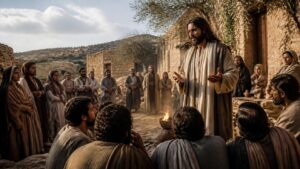
In the Gospel, Jesus takes mercy to its ultimate conclusion. “You have heard that it was said, ‘Love your neighbor and hate your enemy.’ But I say to you, love your enemies and pray for those who persecute you.” Why? “That you may be children of your heavenly Father, for he makes his sun rise on the bad and the good.” The Father does not ration His mercy. He does not wait for us to become perfect. He sends rain and sunshine to the just and the unjust. If we only love those who love us, Jesus says, we are no different from tax collectors and pagans. The mark of the Christian is to love the unlovable, to forgive the unforgivable, to pray for the persecutor. That is the mercy Ahab received from God, and that is the mercy we are called to give.
Pope Francis has often said, “God never tires of forgiving; it is we who tire of asking for forgiveness.” Saint Augustine, reflecting on the command to love enemies, wrote, “What seems impossible is made possible by the grace of God.” The same grace that opened Ahab’s heart to a moment of repentance can open our hearts to love those who have hurt us.
What does this mean for us? We may not be kings who murder for vineyards, but we harbor small Ahabs within us: grudges we refuse to release, enemies we secretly hope will fail, people we exclude from our prayers. Today’s readings challenge us to let go. God forgave Ahab when he humbled himself. Can we not forgive the colleague who slighted us, the family member who betrayed us, the stranger who insulted us? We are not called to approve of evil, but we are called to leave judgment to God and to pour out mercy instead.
Let us pray for the grace to love as God loves: without measure, without conditions, without end. And let us never despair of anyone’s conversion—not even our own. For if God could show mercy to Ahab, He can show mercy to anyone. And He calls us to do the same. Amen.
May God bless you all!