Twenty-fourth Sunday in Ordinary Time (A), September 13, 2026
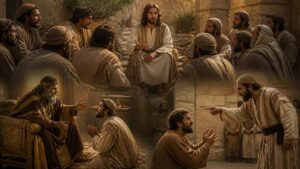
The Wrath of Man and the Mercy of God: The Boundless Measure of Forgiveness
Sir 27:33—28:9, Psalm: 102, Rom 14:7-9, Mt 18:21-35
My dear Sisters and Brothers in Christ,
The Word of God today presents us with one of the most challenging and liberating teachings of our faith: the call to forgive without measure. In a world that often tells us to hold grudges, to seek revenge, and to protect our wounded pride, Jesus invites us into a different way—the way of mercy. The Book of Sirach warns us that wrath and anger are hateful things, and that the sinner clings to them. Saint Paul reminds us that we belong to the Lord in life and in death. And Jesus tells a parable that shatters our human notions of justice.
In the Book of Sirach, we are given a simple but profound teaching: “Forgive your neighbor’s injustice; then when you pray, your own sins will be forgiven.” The measure we use for others is the measure that will be used for us. If we harbor anger, we are like a person who drinks poison and expects the other person to die. The one who forgives is not being weak; they are being set free.
Saint Paul, in the Letter to the Romans, declares, “None of us lives for oneself, and no one dies for oneself. If we live, we live for the Lord, and if we die, we die for the Lord.” Our lives are not our own. We belong to Christ. And if we belong to Christ, we must live as He lived—forgiving, merciful, and compassionate. We cannot claim to be followers of Christ while holding on to unforgiveness.
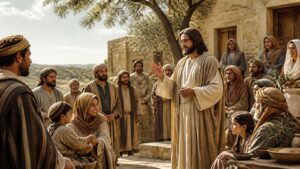
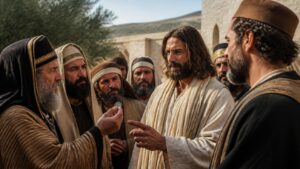
In the Gospel of Matthew, Peter asks Jesus, “Lord, if my brother sins against me, how often must I forgive him? As many as seven times?” Peter thought he was being generous. But Jesus answers, “Not seven times, but seventy-seven times.” Then He tells the parable of the unforgiving servant. A servant owes his master an enormous debt—ten thousand talents, a sum that could never be repaid. The master cancels the debt. But the servant goes out and refuses to forgive a fellow servant a small debt. When the master hears of it, he delivers the servant to the torturers until he pays his entire debt. Jesus concludes, “So will my heavenly Father do to you, unless each of you forgives your brother from your heart.”
Pope Francis has said, “Mercy is the beating heart of the Gospel. It is the name of God.” Saint John Paul II, in his encyclical Dives in Misericordia, wrote, “The Church lives an authentic life when she professes and proclaims mercy.” And Saint Augustine, reflecting on the parable, said, “The Lord has forgiven us a debt we could never pay. If we refuse to forgive others, we are like the wicked servant who forgot what he had received.”
What does this mean for us? We have been forgiven an impossible debt. We have been shown mercy beyond measure. The only appropriate response is to extend that same mercy to others. It is not easy. It is a daily choice. But it is the path to freedom, the path to peace, and the path to eternal life.
Today, let us examine our hearts. Is there someone we need to forgive? Is there a grudge we are clinging to? Let us ask the Lord to give us the grace to forgive as we have been forgiven. And let us remember that the measure of mercy we give is the measure we will receive. Amen.
May God bless you all!